Your Favorites
-
1.0 = Dont Smoke Immediately Experiments from experts proves that Smoking a Cigarette after meal is comparable to smoking 10 ci...
-
Whether its Sandwiches or subs, we love to eat Breads as Beak fast lunch and sometimes Dinner also. But it isn't exactly the most ...
-
The Story Olong Tea is a Traditional Chinese Tea produced through a unique process including withering under the strong sun and ox...
-
It was Surreal innings Played by one man demolition army Chris Gayle that smashed a lot of T20 records against Pune Warriors on 23-04-...
-
Get More Handsome Look Men who sport a heavy 10-day beard are considered most attractive by women, while those with full beards a...
-
Looks like year 2013 is an uneventful year for Bollywood's beauty Katrina Kaif. Last year, the actress made waves with her role as Zo...
-
Set to launch this fall, the A10 will feature a 5-inch Super AMOLED display, a dual-core processor and a separate graphics processor, and...
-
More than a fifth of Syria's schools have been destroyed or made unusable in more than two years of conflict , jeopardizing the educ...
-
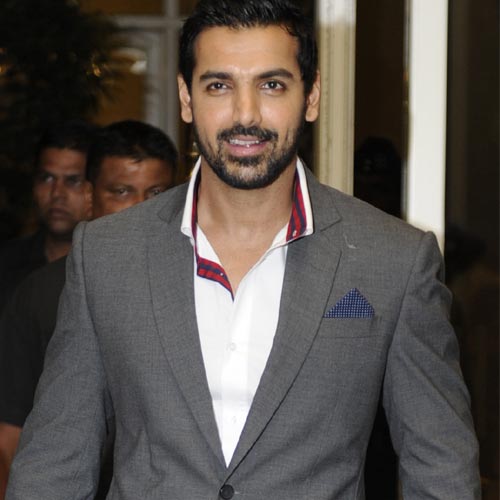
Actor John Abraham, who has performed daredevil stunts in movies like Force, Shootout at Wadala and upcoming Madras Cafe , feels that ...
Friday
John Abraham claims action is safer outside India
smartphone Makes You Fat and Lazy
Were you planning
If you answered yes to either question, you may be turning into a "hyper-connected" couch potato.
According to a study published in the International Journal of Behavioral Nutrition and Physical Activity, frequent cell phone users were far more likely to forego or disrupt physical exercise and scored lower on fitness assessments than peers who used cell phones less frequently.
Though the compact size and mobility of smartphones would seem to facilitate physical activity, the ever-present lure of e-mail, text messages, Facebook, Twitter, games, Pinterest, Instagram, surfing the web, sharing photographs or talking with friends and family is having the opposite effect for some.
"While cell phones provide many of the same temptations as television and Internet connected computers, the difference is that cell phones fit in our pockets and purses and are with us wherever we go," wrote the Kent State University researchers. "Thus, they provide an ever-present invitation to 'sit and play.'"
The study began with a random survey of 305 college students, who were each asked about their cell phone usage, according to lead author Andrew Lepp, an associate professor of recreation, parks and tourism management, and his colleagues.
Students who logged just over 90 minutes a day were considered low-frequency users; those who averaged about 5 hours a day were considered moderate users. Students who spent up to 14 hours on their phone were considered heavy users.
In the second phase of the study, 49 of the surveyed students were randomly selected for physical examination. The students ran on a treadmill until they were exhausted, to determine their cardio-respiratory fitness, and they had their body fat content measured.
Authors found that heavy smartphone users were more inclined toward sedentary behavior than light users. The heavy users also had lower levels of cardiorespiratory fitness than those with lower use.
Study subjects reported that heavy usage had negative effects on their activity level.
"Now that I have switched to the iPhone, I would say it definitely decreases my physical activity, because before I just had a Blackberry," one heavy user told researchers. "Now, if I'm bored, I can just download whatever I want and just sit there and play."
Another heavy user agreed.
"One of my friends called me during my workout, and like, I haven't talked to her in a while and I had to tell her a lot of stuff. So it kind of distracted me from my workout," the study subject told authors.
Interestingly, students who fell into the low phone-usage category said the devices made them more active, because they were able to coordinate recreational pursuits with friends.
However, once they were engaged in a physical activity, the low-use subjects were more like to shut off their phone or put it aside.
Microsoft Overhauls, the Apple Way
SEATTLE — A couple of years ago, a satirical set of diagrams depicting the organization of Amazon, Apple, Facebook and other technology companies made the rounds on the Internet. The chart for Microsoft showed several isolated pyramids representing its divisions, each with a cartoon pistol aimed at the other.
Steven A. Ballmer, the chief executive of Microsoft, has talked increasingly about transforming it into a “devices and services” company.
Its divisions will war no more, Microsoft said on Thursday.
The company said it would dissolve its eight product divisions in favor of four new ones arranged around broader functional themes, a change meant to encourage a tighter marriage among technologies as competitors like Apple and Google outflank it in the mobile and Internet markets.
“To execute, we’ve got to move from multiple Microsofts to one Microsoft,” Steven A. Ballmer, the longtime chief executive, said in an interview.
The notion of organizing the company around the trinity of modern technology products — software, hardware and services — is most famously used by Apple. It is yet another sign of how deeply Apple’s way of doing things has seeped into every pore of the technology industry.
And in the process, some of the biggest technology companies are starting to look much more alike organizationally. The goal is to get thousands of employees to collaborate more closely, to avoid some duplication and, as a result, to build their products to work more harmoniously together.
“The current model is obviously Apple, given how phenomenally successful they have been,” said Kevin Werbach, an associate professor of business at the Wharton School at the University of Pennsylvania. “What Apple has been great at is creating these experiences.”
The changes at Microsoft, a giant in the tech industry for decades that has stalled in the last few years, echo similar moves at its biggest rivals, including some tweaking at Apple. Craig Federighi, who led the development of Apple’s operating system for computers, was also given oversight of much of the operating system for iPhones and iPads. Jonathan Ive, the industrial designer behind the slick look of Apple hardware, took charge of the interface of Apple software. At Google, the development of operating systems for mobile devices and computers was put into the hands of a single executive, Sundar Pichai, rather than two.
Microsoft said on Thursday that it, too, would consolidate its major operating systems, including Windows, Windows Phone and the software that powers the Xbox, under Terry Myerson, who handled engineering only for Windows Phone before. The underlying goal is to create software with tighter linkages to power an array of devices, making it easier for people to use their smartphones, tablets and game consoles as adjuncts to one another.
But Microsoft’s charges are far more sweeping and involve many more people. “This is, in my mind, the biggest thing we’ve ever done,” said Lisa Brummel, a 24-year Microsoft veteran who leads its human resources department, noting that the company has nearly 100,000 employees.
It remains to be seen whether more cohesive teamwork, if that is what results from all the movement, will offer the spark that has been missing recently from so many of Microsoft’s products. The company remains one of the most lucrative enterprises on the planet, with nearly $17 billion in profit during its last fiscal year on $73.7 billion in revenue. But it has been widely faulted for being late with compelling products in two lucrative categories, smartphones and tablets. Its Bing search engine is a distant second to Google and loses billions of dollars a year for Microsoft.
Rivalries among the Microsoft divisions have built up over time, sometimes resulting in needless duplication of efforts. Microsoft managers often grumble privately that one of the most dreaded circumstances at the company is having to “take a dependency” on another group for a piece of software, placing them at the mercy of someone else’s development schedule.
Product development groups will sometimes go to great lengths to avoid this, creating software like e-mail programs that duplicate the functions of other products at Microsoft. While its old divisions all had their own finance and marketing organizations, Microsoft is now centralizing those functions.
Bill Whyman, an analyst at the ISI Group, said Microsoft’s promise to make all of its technologies work better together would be challenging given the sheer breadth of its product portfolio, which covers corporate and consumer products.
“That sounds right but it’s really, really hard to do,” Mr. Whyman said. “Maybe Apple does it with the iPhone ecosystem. Microsoft is proposing to do it over a much broader set of customer applications and uses.”
Amazon has already been trying. It has become a major player in devices, with its Kindle family of e-readers and tablets. Google tiptoed into hardware production with products like the Chromebook Pixel laptop and Google Glass, as well as the failed Nexus Q for streaming media. And Google’s boldest and riskiest move in hardware was spending $12.5 billion to buy Motorola Mobility.
The focus on the full suite of offerings has led several companies to rethink how they are organized. When Larry Page, Google co-founder, took over as chief executive in 2011, he shook things up at the search company, whose structure had become bloated and labyrinthine. To help the company move faster, Mr. Page centralized decision-making power with him, eliminating Google’s former triumvirate of equal decision makers at the top.
Michael A. Cusumano, a professor at the Sloan School of Management at the Massachusetts Institute of Technology, said revamping an organization’s structure tended to provide only temporary remedies.
“I never take these reorganizations too seriously,” said Mr. Cusumano. “Almost any reorganization is designed to solve current problems people see. Over time, other problems come up.”
Egypt PM Struggles to Form Cabinet
Egypt's new Prime Minister was faced with road blocks in forming a new cabinet and steering the deeply polarised nation through a transition phase, as the Muslim Brotherhood today vowed to continue protests against the ouster of President Mohammed Morsi by the army.
"We will continue our peaceful resistance to the bloody military coup against constitutional legitimacy," the Brotherhood said in a statement. "We trust that the peaceful and popular will of the people shall triumph over force and oppression."
Morsi's overthrow last week after nationwide protests demanding his resignation has plunged Egypt into violent turmoil.
Media reports have said that some political figures have declined to take up positions in the new cabinet, even as Prime Minister Hazem al-Beblawy today said that there are no problems facing the process of appointing leaders to governmental positions.
"I have a general idea concerning the formation of a harmonious cabinet that has competencies, technical expertise, and credibility, regardless of any other factors," Beblawy said, in a statement to Al-Masry Al-Youm.
Media reports quoted Beblawy as saying that he does not rule out posts for the Muslim Brotherhood in his cabinet if candidates are qualified.
But the Brotherhood rejected the offer, demanding Morsi's reinstatement and calling for fresh rallies against what it called "a bloody military coup".
"I have thought about my selections for approximately 70 to 90% of the cabinet positions," he said.
The latest developments came as US officials said Washington will go ahead with plans to deliver four F-16 fighter jets to Egypt in the coming weeks.
The new leadership was moving quickly on announcing a new cabinet because it was under pressure to transfer power from military to civilian rule, media reports said.
The country remained deeply divided, as the military-backed government continued to crack down on the Muslim Brotherhood, ordering the arrest of its revered Supreme Guide Mohamed Badie and his deputy Mahmoud Ezzat yesterday.
Egyptian authorities ordered the arrest of top leaders of the Muslim Brotherhood for inciting violence that claimed 55 lives.
Clashes on Monday between Morsi's supporters and security forces killed 55 people and wounded another 435. It was the deadliest day in Cairo since the revolution that forced former President Hosni Mubarak from office in 2011.
Eight other top Brotherhood leaders are wanted by the prosecution.
The public prosecutor also charged 200 people held over the bloodshed outside the military barracks.
Meanwhile, a foreign ministry spokesman told reporters yesterday that Egypt's ousted president Morsi is in a "safe place" following his overthrow by the army.
He added that no charges had been levelled against Morsi yet.
Uncertainty ruled in Egypt as the Muslim holy month of Ramadan has begun and the military said it would address the issues of this week's deadly violence.
Egypt's interim President unveiled a roadmap on Monday for fresh polls by early next year to end the raging political turmoil in the country.
Egypt's interim President Adly Mansour issued the constitutional declaration late Monday night giving himself limited power to make laws, and outlined the timetable for parliamentary and presidential elections.
The whole process will take no more than 210 days, according to the decree, meaning elections will be by February at the latest.
Syrian war imperils education of over 2 million children'
More than a fifth of Syria's schools have been destroyed or made unusable in more than two years of conflict, jeopardizing the education of 2.5 million young people, Save The Children aid agency reported on Friday,
The civil war in Syria has contributed to a sharp increase over the past year in the number of violent incidents affecting children's education reported worldwide, the agency said.
Save The Children said it had stepped up its monitoring due to Syria's worsening crisis and concerns over girls' access to education in parts of South Asia and sub-Saharan Africa.More than 70 percent of 3,600 such incidents in 2012 occurred in Syria, where school buildings were shelled, teachers attacked and children recruited into armed groups, it added.
The report includes new UNESCO research showing that 48.5 million children living in conflict areas across the world are out of school, more than half of them of primary school age.
Save The Children said an estimated 3,900 schools in Syria had been destroyed or put out of action by January 2013.
"But more recent estimates in April show a very rapid increase in this number, with 22 percent of the country's 22,000 schools rendered unusable," it said.
"The combined effects of conflict have jeopardized the education of 2.5 million school-age children and young people."
"APPALLING CRIMES"
Save the Children Chief Executive Jasmine Whitbread said in a statement accompanying the report: "The classroom should be a place of safety and security, not battlegrounds where children suffer the most appalling crimes. Children who are targeted in this way will be paying the price for the rest of their lives."
The report called for more humanitarian aid to be spent on schooling, saying the Syrian education sector had requested $45 million in January from the UN Syria Humanitarian Assistance Response Plan but had only received $9 million by June.
Levels of funding for education in humanitarian emergencies in general remained "shockingly low".
Education, the report said, had fallen to 1.4 percent of overall humanitarian funding last year from 2 percent in 2011, below the 4 percent global target set in 2010.
It urged world leaders to protect education by increasing funding, criminalizing attacks on education, prohibiting the use of schools by armed groups and by working with schools and communities to adopt local measures to preserve schools as centers for learning, especially in times of conflict.
The report was timed to coincide with an appearance later on Friday by Pakistani schoolgirl Malala Yousafzai at the UN General Assembly for her first public speech since gunmen attacked her on her way to school in Pakistan in October.
RBI Thinks Difficult to Predict Rupee Path
Attributing the decline in rupee to global factors, Reserve Bank Governor D Subbarao today said it would be difficult to estimate when the situation will improve.
"The rupee depreciation over the last six weeks has been because of global factors .... It is difficult to say how long that effect will persist because it is factors beyond our control," he told reporters here.
The rupee has declined by about 9 per cent in the past three months and had touched a record low of 61.21 to the dollar on July 8.
The currency recovered after the RBI and Sebi announced measures to curb volatility and speculation in the currency derivative market.
The rupee climbed to a one-week high today and closed at 59.67 on Thursday.
On the possibility of a rate cut, Subbarao said he would assess growth, inflation and the external situation while taking a view in the upcoming policy on July 30.
BlackBerry A10 (Aristo) Finally Revealed
Set to launch this fall, the A10 will feature a 5-inch Super AMOLED display, a dual-core processor and a separate graphics processor, and it is going to be the largest phone BlackBerry has ever made in terms if screen size. Unfortunately, it seems as if the display’s resolution is going to be 1280 x 720. That’s compared to 1080p displays that are available on many devices, which offer pixel densities north of 350 ppi.
The styling is much more rounded compared to BlackBerry’s current smartphones, as we reported yesterday, and we are told the back of the device is going to feature something similar to the BlackBerry Q10.
Below is a screenshot from the actual handset, and as always, thanks to daddygns.
Mercedes Benz India Launches B Class Diesel at Rs 22.60 Lakh
Strengthening its compact car portfolio further, Stuttgart based luxury car maker, Mercedes Benz on Thursday introduced the diesel version on its compact hatchback B Class at Rs 22.60 lakh ex-showroom Mumbai.
Having already sold 500 units of B Class petrol since its launch nine months back, Mercedes Benz expects the diesel variant to outsell petrol variants in the coming months and lead the double digit growth in 2013, for the luxury carmaker.
Eberhard Kern, MD & CEO, Mercedes Benz India told ET that despite the changing fuel price equation, the customers are still demanding diesel cars. "In our portfolio where diesel variant is available, it constitutes 80% of our total sales with petrol making up for 20% with the B Class too we are expecting the same.
The launch of B Class Diesel is a continuation of Mercedes Benz India's product offense for 2013. The response for the B-Class petrol has been encouraging and we are confident that the new B-Class diesel will add to the demand of the car, with its new improved efficient engine, stylish characteristics and unique touring capabilities," said Kern.
The company says its new generation compact cars (A Class and B Class) have received a strong response from the market, and over the last 9-10 months it has sold over 1,000 units. "The A Class launch was the most successful launch in the history of Mercedes Benz in India. Within 10 days of the launch, we got over 400 bookings and we expect the deisel version of B Class to bring in incremental volumes going ahead," added Kern.
Available only in one variant, the B 180 CDI Style is powered by 2.2 litre four cylinder engine which produces 250 Nm of torque @ 1400-2800 rpm. The vehicle reaches a top speed of 190 Km/h. Mercedes Benz claims the B-Class diesel delivers a mileage of 18.98 kilometer per litre.
Mercedes Benz says the new B-Class diesel is a perfect blend of an SUV and a sedan which integrates the utility of an SUV and the ride quality of a sedan.
A new generation car from Mercedes-Benz is equipped with features like the Intelligent Assistance Systems, SLS AMG INSPIRED 7G-DCT transmission with shift paddles which is inspired by SLS AMG and is unique in the luxury compact segment.
There is also a new interior trim in the B 180 CDI: Brown Burr Walnut with satin finish which adds to the luxury quotient of the new B-Class. The new Audio 20 CD Infotainment System with dual tuner, MP3/WMA/AAC- compatible CD player also features an USB interface and AUX-IN socket (in the centre armrest).
Bhaag Milkha Exciting - Rakeysh Omprakash Mehra
Director Rakeysh Omprakash Mehra saysBhaag Milkha Bhaag is life defining film for him. Starring Farhan Akhtar and Sonam Kapoor, the biopic hits screens on Friday.
"It's a life defining film for me and my life," Mehra told reporters here.
Describing the childhood of Milkha in the film as its important part, Mehra said, "It was a lost childhood due to Partition of the country. The characters in this film are true to life and reality." Mehra said the film also sheds light on not so great moments in Milkha's life.
"In his early days Milkha even went to Tihar jail, but he wanted to earn something by hardwork and respect and thus decided to join the Army," Mehra said adding that "after three attempts Milkha succeeded to get into the Army." "Army recognised Milkha and provided him a platform from where he rose. I dedicate this film to Army," he said adding that the film will be screened in 125 Army centres.
Mehra said that he could not sleep for two to three months after meeting Milkha because he wanted to make his biopic.
"Milkha got lot of offers from Rs50 lakh to Rs1.5 crore, but he decided to give me the story for Rs one. That one rupee of 1960's Rome Olympic is much more than Rs ten crore in my eyes," he said.
Mehra said that he was lucky that he was selected by Milkha to make the film. On being asked was he comfortable working with Farhan, Mehra said Farhan made my job easy.
"I work with instinct...I don't listen to my own mind... if during the making of Bhaag Milkha Bhaag I was away from my instinct Farhan Akhtar who himself is a director provided me a bouncing board," Mehra said.
Writer Prasoon Joshi said that he feel that Bhaag Milkha Bhaag is an "unique film."
"This film required lot of raw material and historical facts and there understanding. Besides, historical understanding of time and Milkha was also required before penning down the story. I have read lot of literature and it helped in understanding the saga of Partition," Joshi said.
Joshi said that the film has no negative impact on Pakistan as "it shows how Partition affected the mind of a child... its not a political statement."
Katrina Kaif to have no releases this year?
Looks like year 2013 is an uneventful year for Bollywood's beauty Katrina Kaif. Last year, the actress made waves with her role as Zoya, a Pakistani ISI agent in Kabir Khan's Ek Tha Tiger along with ex-beau Salman Khan. And of course, there was the highlight of 2012, Yash Chopra's Jab Tak Hain Jaan, in which Katrina played the ever beautiful Meera opposite Major Samar, played by Shah Rukh Khan.
However, this year apart from a cameo in Main Krishna Hoon, and an appearance in Bombay Talkies as herself, Katrina Kaif will be missing out on any big releases.
Both her films, Dhoom 3 featuring Aamir Khan and Bang Bangopposite Hrithik Roshan have been stalled and pushed to next year.
Katrina Kaif's ambitious project with Yash Raj Films, Dhoom 3 has not yet been able to decide on a release date, owing to co-star Aamir Khan's obsession with perfection.
Sources say Aamir Khan wants to shoot only when he is physically and emotionally fit to play his role of the villain, which in turn has affected Kat.
Kartina's second big release, Bang Bang by Siddharth Anand has also been postponed, since her love interest onscreen Hrithik Roshan is recuperating from a recent brain surgery and doctors have advised him a month's rest.
We hear with so much free time on her hands, the actress might take off to London to spend her upcoming birthday, which falls on July 16, with her family.
Virat is an Aggressive Captain Like Ganguly
Noted coach Rajkumar Sharma, who played a pivotal role in shaping up Virat Kohli's career, feels that his ward's aggressive captaincy resembles a lot with Sourav Ganguly's methods but insisted that he should also learn the ropes from current skipper Mahendra SinghDhoni.
"Virat is an aggressive player by nature. He is someone who always likes to attack and take the opposition head on which is also reflected in his captaincy. For me, Virat belongs to the Sourav Ganguly 'School of captaincy' which is to attack the opposition from the word 'go'," Sharma told PTI during an interaction today.
Just like any concerned coach, Sharma is also aware that aggression should be blended with caution which is the hallmark of a good captain.
"I am all for aggressive captaincy but I believe that he should also know the line that one shouldn't overstep. If he does that, then I come into picture to make him aware," Sharma analysed.
Kohli, in his maiden stint as India captain has led the team to the final of the Tri-Series in West Indies but his coach doesn't want his ward to be pushed into the hot seat.
"Mahendra Singh Dhoni is an exceptional captain and I believe that Virat still has a lot to learn from Dhoni although no two persons are the same and their thought process is bound to be different. I feel that till Dhoni is playing, he is the best man to lead India and Virat will certainly get it when his turn comes around," Sharma opined.
However the former first-class cricketer doesn't believe that age should be a criteria while selecting a captain. "Age has got nothing do with captaincy. It's more about how good one is when it comes to analysing match situation, reacting to it and also about leading from the front with good performances."
The coach also believes Virat has come of age in the past couple of years and is more confident about his game.
"He had some problems but that was way back in 2008 during IPL-I. After that, he understood his mistakes and also worked hard on his game. He has matured a lot and that's for everyone to see," Sharma concluded.
Sreesanth to Act in Malayalam Film
Sreesanth, who was arrested by Delhi police on allegations of spot fixing and is now out on bail, said he always wanted to act in a film and was "excited" with the project which he described as "challenging". "It will not be easy as cricket," the cricketer said.
Disgraced pacer S Sreesanth will be acting in a Malayalam film, the shooting of which would begin soon.
Sreesanth, who was arrested by Delhi police on allegations of spot fixing and is now out on bail, said he always wanted to act in a film and was "excited" with the project which he described as "challenging". "It will not be easy as cricket," the cricketer said.
The film, tentatively titled Big Pictureis being directed by Balachandra Kumar.
Sreesanth had done a guest role in noted Malayalam lyricist Kaithaparam Damodaran Namboodiri's film Mazhavillinattam vare (Till the endge of rainbow) but it was edited out after the spot fixing
Chinese Institute Develops 100MP Camera
A Chinese institute claimed to have successfully developed a 100-megapixel camera which could produce high-resolution imaging in the fields of aerial mapping, disaster monitoring and intelligent transportation systems.
The IOE3-Kanban camera was developed by the Institute of Optics and Electronics under the Chinese Academy of Sciences making it China's highest pixel camera, CAS said in a statement.
The camera is capable of producing images with 10,240 x 10,240 pixels, the statement said.
Moreover, it is small and light, with its widest part measuring only 19.3 cm, state-run Xinhua quoted the statement as saying, adding that it can be used at temperatures ranging from minus 20 degrees centigrade to 55 degrees centigrade.
Its high sensitivity and high dynamic range (HDR) features mean it will be useful in high-resolution imaging in the fields of aerial mapping, city planning, disaster monitoring and intelligent transportation systems, the statement said.
Intelligent transportation system is aimed to provide innovative services relating to different modes of transport and traffic management, enabling various users to be better informed and make safer, more coordinated, and 'smarter' use of transport networks.
The camera is equipped with advanced optical systems, camera control systems and high-capacity data recording systems, and it has proven successful in a recent trial use as a part of a national aerial remote-sensing system, it said.
The institute also developed an 81-megapixel camera during the 10th Five Year Plan period (2001-2005), and the latest achievement took the researchers two years to develop.
A megapixel is one million pixels, and is a term used not only for the number of pixels in an image, but also to express the number of image sensor elements of digital cameras or the number of display elements of digital displays.
Doctors in Lucknow hospitals spend less than two min with a patient
Doctors at super-speciality centres of Lucknow spend less time with patients than it takes in cooking a pack of Maggi, i.e, less than two minutes.
The startling revelation has come to the fore during a random assessment of time spent by doctors with patients at King George's Medical University and Sanjay Gandhi Post Graduate Institute of Medical Sciences - the two most prominent centres of medical facilities in Uttar Pradesh.
In KGMU, where a consultant attends to around 300 patients per out patient department (OPD) session of four hours, the doctor-patient interaction lasts for about 75 seconds (1.25 minutes). The time decreases in departments such as medicine where the average daily patient burden is over 500. In SGPGI, where doctors meet over 200 patients during the six-hour OPD, the time per patient is 105 seconds (1.76 minutes).
It's worse in government hospitals which are already grappling with acute shortage of specialists. For example, take the case of the pulmonary medicine department of Shyama Prasad Mukherjee Civil Hospital. On a given day, a doctor on duty is expected to attend to 150 new patients (being examined for the first time) along with 450 old patients (who have been examined at least once). This means that a doctor attends to 600 patients in six hours. Thus, the time spent by a doctor per patient is one minute.
Government doctors are doing a "commendable" job because unlike teachers in the medical institutions, they do not have a team of residents to prepare the patient history before hand. This reminds one of the bollywood cliche - "Mariz ke liye dua kije, doctor sirf dava deta hai (Pray for the well being of patient, the doctor can only give medicines)."
Researches show that time plays an important role in doctor-patient relationship; a must to ensure that patient's condition improves while doctors learn.
An American study suggests that doctors should spend 7-8 minutes with each patient. In Great Britain, a doctor usually spends 5-8 minutes with a patient while in US and Sweden, doctor-patient interaction is for about 10-20 minutes.
Various researches have examined the outcome of the specific time spent by doctors with their patients. A recent work by researchers at division of general internal medicine, John Hopkins University (published in April 2013), states that while patient satisfaction and outcomes suffered, inappropriate prescriptions increases when doctors spend less time with patients. It also adds that there may be even long-term repercussions of such "hurried" interactions.
Similarly, a British study (Wilson Et al) found that doctors were able to achieve a higher rate of hypertension screening and health education activities when they increased the patient interaction time from 7.1 to 8.2 minutes. Likewise, researcher Roland and his colleagues found that face to face interaction of about six minutes helped in gathering better inputs for patient history and addressed psychosocial concerns.
A poor doctor-patient relationship may also be the reason for frequent incidents of violence in the hospitals. Member, working group on tertiary care institutions, Planning Commission of India, Prof Mansoor Hasan says a burdened doctor cannot think of establishing a relationship with a patient or his attendant.
"The face of medical science has changed tremendously over the past few decades which reflects in the relationship between doctors and patients too," he adds.
Prof Hasan suggests two steps to bridge this gap: "One, we must acknowledge that the cost of medical treatment has increased exorbitantly. Thus, there is need to inculcate a discipline for medical insurance. Second, attendants today are more aware and ask valid questions regarding the process of treatment. Such questions cannot be ignored and so there is need to set-up a system of counselling at different levels of treatment - a practice ritualistically followed in best medical centres of the world."
The startling revelation has come to the fore during a random assessment of time spent by doctors with patients at King George's Medical University and Sanjay Gandhi Post Graduate Institute of Medical Sciences - the two most prominent centres of medical facilities in Uttar Pradesh.
In KGMU, where a consultant attends to around 300 patients per out patient department (OPD) session of four hours, the doctor-patient interaction lasts for about 75 seconds (1.25 minutes). The time decreases in departments such as medicine where the average daily patient burden is over 500. In SGPGI, where doctors meet over 200 patients during the six-hour OPD, the time per patient is 105 seconds (1.76 minutes).
It's worse in government hospitals which are already grappling with acute shortage of specialists. For example, take the case of the pulmonary medicine department of Shyama Prasad Mukherjee Civil Hospital. On a given day, a doctor on duty is expected to attend to 150 new patients (being examined for the first time) along with 450 old patients (who have been examined at least once). This means that a doctor attends to 600 patients in six hours. Thus, the time spent by a doctor per patient is one minute.
Government doctors are doing a "commendable" job because unlike teachers in the medical institutions, they do not have a team of residents to prepare the patient history before hand. This reminds one of the bollywood cliche - "Mariz ke liye dua kije, doctor sirf dava deta hai (Pray for the well being of patient, the doctor can only give medicines)."
Researches show that time plays an important role in doctor-patient relationship; a must to ensure that patient's condition improves while doctors learn.
An American study suggests that doctors should spend 7-8 minutes with each patient. In Great Britain, a doctor usually spends 5-8 minutes with a patient while in US and Sweden, doctor-patient interaction is for about 10-20 minutes.
Various researches have examined the outcome of the specific time spent by doctors with their patients. A recent work by researchers at division of general internal medicine, John Hopkins University (published in April 2013), states that while patient satisfaction and outcomes suffered, inappropriate prescriptions increases when doctors spend less time with patients. It also adds that there may be even long-term repercussions of such "hurried" interactions.
Similarly, a British study (Wilson Et al) found that doctors were able to achieve a higher rate of hypertension screening and health education activities when they increased the patient interaction time from 7.1 to 8.2 minutes. Likewise, researcher Roland and his colleagues found that face to face interaction of about six minutes helped in gathering better inputs for patient history and addressed psychosocial concerns.
A poor doctor-patient relationship may also be the reason for frequent incidents of violence in the hospitals. Member, working group on tertiary care institutions, Planning Commission of India, Prof Mansoor Hasan says a burdened doctor cannot think of establishing a relationship with a patient or his attendant.
"The face of medical science has changed tremendously over the past few decades which reflects in the relationship between doctors and patients too," he adds.
Prof Hasan suggests two steps to bridge this gap: "One, we must acknowledge that the cost of medical treatment has increased exorbitantly. Thus, there is need to inculcate a discipline for medical insurance. Second, attendants today are more aware and ask valid questions regarding the process of treatment. Such questions cannot be ignored and so there is need to set-up a system of counselling at different levels of treatment - a practice ritualistically followed in best medical centres of the world."
Subscribe to:
Posts (Atom)